Trending Echoes Podcast
Trending Echoes is a podcast series by Trends Research and Advisory that explores contemporary issues, emerging trends, and innovations shaping the world today. The podcast features expert guests from various fields—ranging from academia, policy, technology, and media—who provide in-depth insights on topics like global cooperation, artificial intelligence, and the future of content creation. Episodes often focus on how these trends affect societies, industries, and international relations, making it a platform for knowledge exchange and thoughtful discussions.








Episodes
Jan 28, 2025
Jan 28, 2025
39 min
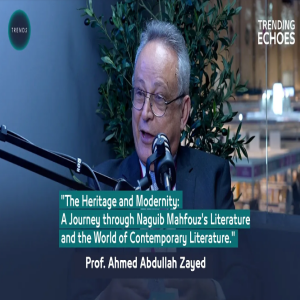
Join us for an enlightening episode titled "The Heritage and Modernity: A Journey through Naguib Mahfouz's Literature and the World of Contemporary Literature " as Hala Sarhan hosts Prof. Ahmed Abdullah Zayed, delving into the enchanting realm of Arabic literature at ADIBF2024. From timeless classics to contemporary gems, they explore the essence of storytelling, cultural significance, and the evolving landscape of literature. Tune in to Trending Echoes for a captivating conversation that celebrates the beauty and depth of Arabic literary heritage, offering insights, reflections, and a glimpse into the vibrant tapestry of words that shape our world. Don't miss this engaging dialogue that promises to ignite your passion for literature and inspire your imagination. Listen now and embark on a journey through the captivating echoes of ADIBF2024!!
Jan 28, 2025
Jan 28, 2025
25 min
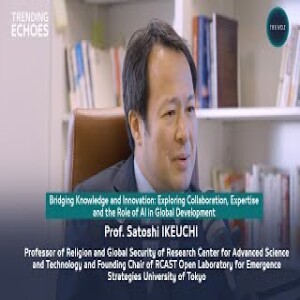
In our latest episode of Trending Echoes, we are thrilled to welcome Prof. Satoshi Ikeuchi from the University of Tokyo! As the Professor of Religion and Global Security at the Research Center for Advanced Science and Technology and Founding Chair of the RCAST Open Laboratory for Emergence Strategies, Prof. Ikeuchi brings unparalleled insights into the intersection of knowledge, innovation, and global security. He discusses his academic journey and the impact of these fields on his current work, which began during the late Cold War era, prompting his lifelong focus on the Middle East. The episode explores how TRENDS Research and Advisory initiated its collaboration with the University of Tokyo, leading to their upcoming joint conference, which provides a rare platform for Japanese audiences to directly engage with Middle Eastern experts. Ikeguchi reflects on Japan's potential to lead in the adoption of AI and technology, foreseeing AI's transformative role in international relations by helping developing nations bridge gaps with advanced economies. Ikeguchi also shares insights on Japan's energy sustainability goals, highlighting his center's new initiatives in sustainable development and energy security. He emphasizes the importance of achieving global consensus on energy transition—a task requiring collaboration among both energy consumers and producers worldwide. Reflecting on his own experiences studying in Cairo, Ikeguchi explains how it deepened his connection to the Middle East, fostering a lasting cultural affinity. He notes the growing curiosity between Japan and Middle Eastern societies, spurred by mutual interests in culture, tourism, and shared experiences.
Jan 28, 2025
Jan 28, 2025
24 min
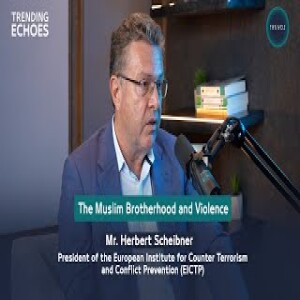
In this episode of the Trending Echoes podcast, former Austrian Defense Minister Herbert Scheibner discusses the influence of the Muslim Brotherhood in Europe and the challenges it presents. Scheibner explains that the Brotherhood initially entered Europe as a refuge but gradually established a strong, often hidden, presence across various countries. This organization and others with similar ideologies now use a mix of political, cultural, and social methods to build parallel communities within European societies, creating tensions by advocating separate societal norms and sometimes avoiding integration. Scheibner describes the Brotherhood’s ultimate goal of creating an "Islamic society," which he views as incompatible with European values like secularism, equality, and tolerance. He highlights that, due to a lack of transparency and linguistic barriers, many Western governments underestimated the Brotherhood's ambitions. However, growing awareness has led to increased scrutiny and more proactive measures against such groups. Scheibner also underscores the Brotherhood's strategic use of social media to spread its ideology and recruit members, making them difficult to counter effectively. In response, he recommends a multi-layered approach, combining policy, international cooperation, and awareness campaigns, as well as promoting positive models of religious coexistence, like the Abrahamic Family House in the UAE. He concludes by urging global collaboration, especially among Arabic-speaking nations and Europe, to prevent extremist groups from exploiting unresolved political issues, which they often use to fuel their narratives and attract followers.
Jan 28, 2025
Jan 28, 2025
1 hr 1 min
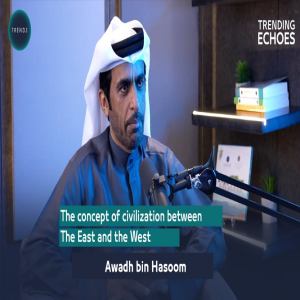
Explore the rich tapestry of civilizations in "Trending Echoes - The Concept of Civilization between the East & the West," featuring Awadh bin Hasoom. Delve into Eastern and Western civilisations' historical and contemporary intersections, unravelling their shared legacies and divergent paths. Join us on an enlightening journey through cultures, ideas, and perspectives.
Jan 28, 2025
Jan 28, 2025
26 min
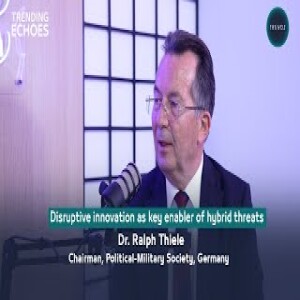
Welcome to this episode of Trending Echoes Podcast, hosted by Rahaf Al-Khazraji from the Frankfurt Book Fair. Today, we’re joined by Dr. Ralph Thiele, Chairman of the Political-Military Society in Germany, for an in-depth discussion on hybrid threats and disruptive technologies.
Dr. Thiele explains that hybrid threats—combinations of cyber attacks, misinformation, and exploitation of societal vulnerabilities—have gained momentum since the Arab Spring, circumventing traditional borders to destabilize governments. He notes that innovations like AI and autonomous systems enable remote attacks, adding layers of complexity to defense efforts. Disruptive technologies, such as 5G and AI, intensify hybrid warfare, effectively blurring lines between peace and conflict. For example, real-time communication systems and autonomous drones deployed in Ukraine illustrate how these tools can be leveraged aggressively.
Highlighting the importance of education, Dr. Thiele commends Gulf nations for their progressive security approaches, stressing that young people need strong, relevant training to counter evolving threats. Effective defense requires situational awareness and coordinated security strategies, supported by collaboration between diplomatic, military, and cyber forces.
Dr. Thiele argues that well-trained professionals are crucial, but funding limitations can hinder readiness, underscoring the broader societal risks involved. On ethics, Dr. Thiele calls for a robust moral framework around disruptive tech use in warfare, which he notes is underdeveloped globally. He illustrates this with examples from Russia, China, and Iran, which employ hybrid tactics—such as satellite hacks in Ukraine and economic disruption in Western Europe—to exert influence. He urges strategic investment in technology and expertise, advocating for a cultural shift toward awareness. Building this capacity, he concludes, is essential for future resilience against hybrid threats.
Jan 28, 2025
Jan 28, 2025
32 min
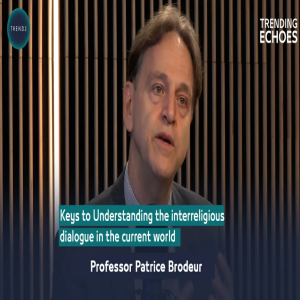
Straight from Paris, the vibrant capital of France, comes a fresh episode of the Trending Echoes podcast titled 'Keys to Understanding Interreligious Dialogue in the Modern World,' featuring Professor Patrice Bourdour, Associate Professor of Religious Studies at the University of Montreal.
Jan 28, 2025
Jan 28, 2025
21 min
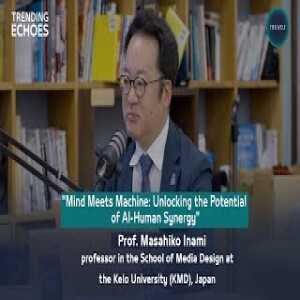
In this episode of Trending Echoes, Professor Masahiko Inami of the University of Tokyo delves into the future of human-AI integration, emphasizing the potential for AI to enhance human capabilities. From improving memory and communication to revolutionizing healthcare and sports, Professor Inami envisions a world where AI plays a transformative role in augmenting human abilities. He explores ethical considerations, the potential for inclusive sports, and the long-term impact of AI on human intelligence. He also highlights the importance of international cooperation in setting regulations and enhancing quality of life by expanding individual choices. Inami sees a future where AI will not just assist but redefine human capabilities, allowing people to "wear" abilities like clothes—changing from a tennis player one day to a chess master the next. He stresses the importance of international collaboration for regulating AI integration to ensure innovation and protect human rights. Ultimately, AI could empower individuals to live fuller lives by providing more options and enhancing their ability to choose freely.
Jan 28, 2025
Jan 28, 2025
48 min
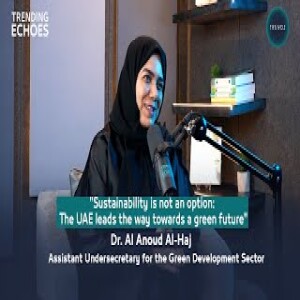
In this episode of Trending Echoes, H.E. Dr. Alanoud Alhaj, Assistant Undersecretary for the Green Development and Climate Change Sector, explores the UAE’s pivotal role in sustainability, presenting it as a cornerstone of the nation's vision and future. Reflecting on the outcomes of COP28, Dr. Alanoud emphasizes key achievements such as climate finance agreements, health initiatives, and renewable energy expansion, all while ensuring the global impact of the UAE Consensus. She ties sustainability to Emirati culture, noting how historical practices have evolved into modern innovations like Masdar City. One of the central themes discussed is the integration of sustainability into education, particularly through "green curricula" beginning from primary school. During COP28, the UAE hosted a significant meeting of education ministers focused on sustainability, showcasing the country’s dedication to fostering a culture of environmental responsibility among future generations. Dr. Alanoud highlighted local initiatives, such as recycling programs and waste-to-energy projects, designed to embed sustainable thinking in everyday practices. On the international stage, Dr. Alanoud stressed the UAE’s diplomatic leadership, particularly through the COP28 Troika, which includes the presidencies of COP28, COP29, and COP30. This collaboration is designed to carry forward the outcomes of COP28, supporting other countries in capacity-building and ensuring that climate commitments are upheld. The UAE's partnership with IRENA and its ongoing support for over 20 nations in developing their national climate strategies are key examples of its global role. Additionally, Dr. Alanoud delved into the role of technology in advancing sustainability, with electric vehicles (EVs) being a focal point. While EVs have lower emissions, she raised critical questions about the recyclability of batteries and the need for continuous research in this area. Acknowledging that sustainability is a process of evolution, she believes that advancements in technology will continue to improve the environmental footprint of vehicles and other sectors. Looking toward the future, Dr. Alanoud outlined the UAE’s goals for 2050, including the transition to net zero emissions and increasing solar capacity as part of a diversified energy mix. The UAE’s commitment to renewable energy and carbon capture strategies reflects its dedication to reducing reliance on fossil fuels and creating a sustainable energy future. She concluded with an inspiring message for the younger generation, encouraging them to stay curious and learn from both experienced leaders and their peers, as sustainability is a shared responsibility that requires collaboration across sectors.
انضموا إلينا في حلقة ملهمة من سلسلة #TRENDINGECHOES مع سعادة الدكتورة العنود الحاج، وكيلة الوزارة المساعدة لقطاع التنمية الخضراء والتغير المناخي. اكتشفوا لماذا "الاستدامة ليست خياراً"، وكيف تمهد دولة الإمارات الطريق نحو مستقبل أكثر خضاراً.